Education Plan
Engineering
Starting in Sixth Grade — A Core Part of Every Student's Curriculum
Engineering for Every Student, Starting in Sixth Grade
Every student at Garfield County School Of Innovation, starting in the sixth grade, will participate in dedicated Engineering classes as a regular part of the school day — not as an occasional enrichment activity, but as a core component of the curriculum.
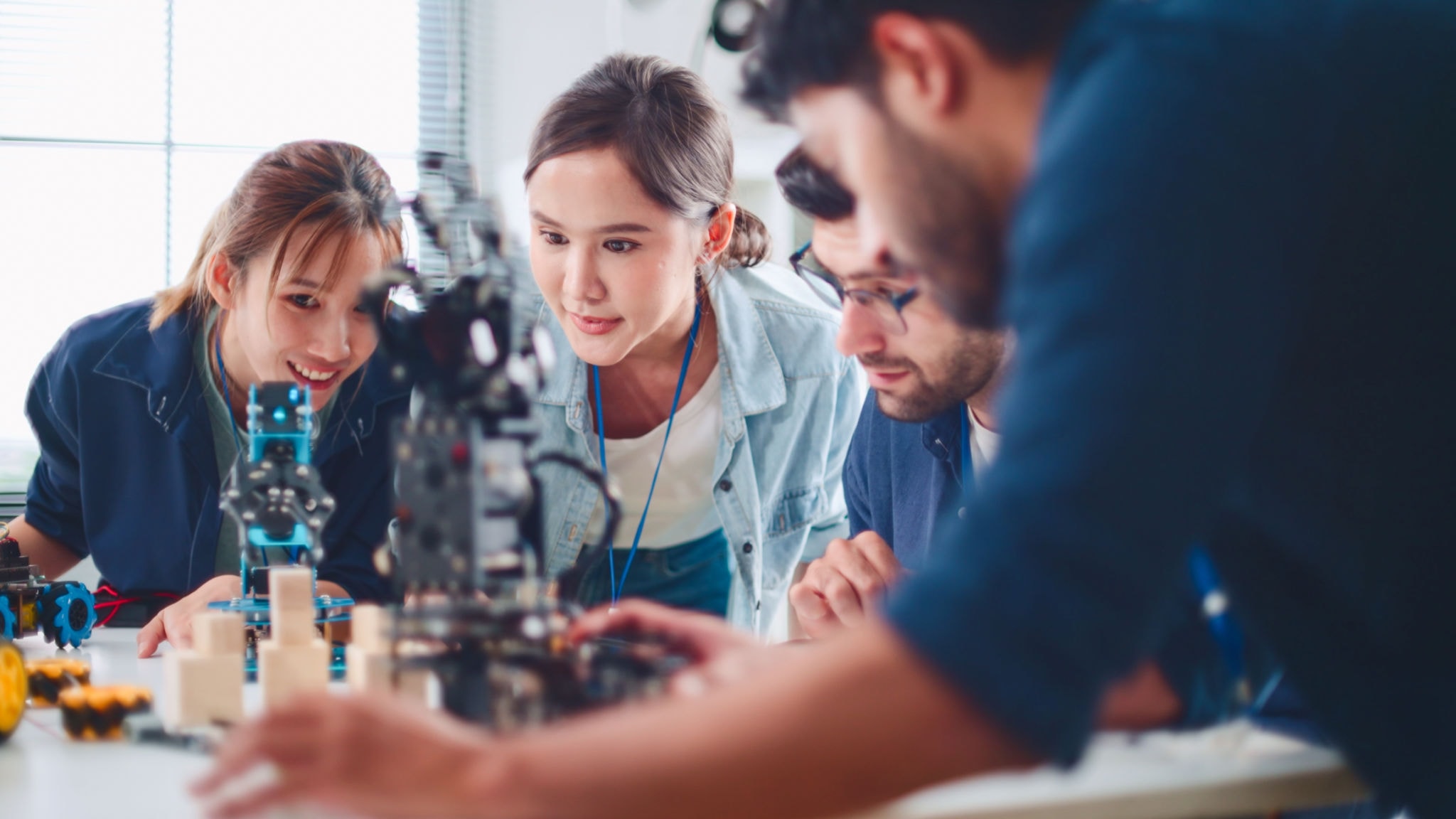
Through age-appropriate design challenges, students will learn the engineering design process: defining problems, brainstorming solutions, prototyping, testing, and refining. Early grades will emphasize hands-on exploration with simple materials, spatial reasoning, and collaborative problem-solving; as students advance, engineering experiences will integrate more deeply with science, mathematics, technology, and real-world applications.
By making engineering a continuous thread from Sixth Grade through high school, GCSI ensures that all students — not only those who self-select into elective pathways — build the habits of mind, creativity, and technical confidence that prepare them for advanced STE³M + Business coursework, career exploration, and lifelong innovation.
What Students Learn
Engineering Design Process
Students learn to define problems, brainstorm solutions, prototype, test, and refine — the core cycle used by professional engineers worldwide.
Spatial Reasoning & Materials
Early grades emphasize hands-on exploration with simple materials and spatial reasoning, building the foundational thinking skills engineering demands.
Collaborative Problem-Solving
Students work in teams to tackle real challenges, developing communication, leadership, and cooperative skills alongside technical knowledge.
STE³M Integration
As students advance, engineering experiences integrate more deeply with science, mathematics, technology, and real-world applications.
Professional & Technical Services
Architecture, engineering, and surveying are high-wage career targets identified by the Colorado River Valley Economic Development Partnership.
Renewable Energy Manufacturing
Specialized manufacturing of renewable-energy components are among the high-wage targets by the Colorado River Valley Economic Development Partnership.
A Continuous Thread from Sixth Grade Through High School
Foundations
Hands-on exploration with simple materials, spatial reasoning, and collaborative problem-solving using the engineering design process.
Integration
Engineering experiences integrate with science, mathematics, and technology — connecting classroom learning to real-world applications.
Advanced Application
Students apply engineering skills to advanced STE³M + Business coursework, CTE pathways, and career exploration in high-demand fields.
GCSI's Required Sequence
GCSI's required engineering sequence from middle school is the K–12 preparation for professional and technical occupations in our region.
High-Wage Career Pathways in Our Region
Professional and technical services and specialized manufacturing of renewable-energy components are high-wage targets identified by the Colorado River Valley Economic Development Partnership.
The Game/Competition Level — Where Engineering Gets Real
One of the most powerful motivators in engineering education is competition. GCSI students will have the opportunity to participate in nationally recognized engineering competitions that raise the stakes, sharpen skills, and connect students to a broader community of innovators. These aren't just contests — they are the "game level" of engineering: the moment classroom learning becomes real-world performance.
Why Competition Matters
Competitions transform engineering from a subject into an experience. Students who compete develop resilience, teamwork, time management, and the ability to perform under pressure — exactly the qualities that colleges and employers look for. Competing at regional, state, and national levels also exposes students to peers from across the country, broadening their perspective and raising their aspirations.
For the Inspiration and Recognition of Science and Technology
FIRST Robotics Competition
FIRST is one of the most prestigious STEM competitions in the world. Teams of high school students design, build, and program industrial-sized robots to compete in a game that changes every year. FIRST competitions emphasize gracious professionalism — competing fiercely while respecting teammates, opponents, and the process. GCSI students participating in FIRST will gain hands-on experience with mechanical design, programming, electronics, and project management — all while competing at regional and potentially national levels.
Boosting Engineering, Science & Technology
BEST Robotics
BEST Robotics is designed to excite and engage middle and high school students in science, technology, engineering, and mathematics. Each fall, teams receive identical kits of raw materials and six weeks to build a robot that competes in a game themed around real-world engineering challenges. BEST emphasizes accessibility — every team starts with the same materials, so success depends entirely on creativity, engineering skill, and teamwork. For GCSI students, BEST is an ideal entry point into competitive engineering.
Connecting STEM to the Real World
Technology Student Association (TSA)
TSA is a national organization for students engaged in STEM. TSA competitions span dozens of disciplines — from robotics and coding to architectural design, engineering graphics, and video game design. Students compete individually and in teams at regional, state, and national conferences. TSA membership also develops leadership and professional skills through chapter activities and community service. For GCSI students, TSA provides a broad competitive arena that matches every engineering interest.
Ready to Build the Future?
Submit a Letter of Intent to enroll your student at Garfield County School Of Innovation — where engineering is for every student, starting in sixth grade.
Submit Letter of Intent